How to brief a custom packaging requirement: a checklist for buyers and engineers
A clear brief gets you to a working pack faster. The details to share about your product, its journey, your packing line and your test requirements, with a copy-ready checklist.

Hexacell team
7 min read

Short answer: A good custom packaging brief tells the supplier what the product is, how big and heavy it is, where it is fragile, and how it will be handled, stored and transported, plus your volumes, timelines, packing line limits and any test standard your customer requires. Photos, drawings and details of your current packaging make the brief much stronger. With this information, packaging can be designed around the product from the start instead of being corrected after a failed trial.
This guide follows the Understand stage of Hexacell's custom packaging development process. Copy the checklist at the end into your enquiry.
Why the brief matters
Many packaging problems trace back to missing information: an unmentioned stacking height, a sea leg added later, or a packing line that cannot handle a new component. Each gap means another design round. A complete brief lets the supplier choose the right structure, cell size, thickness and cushioning on the first prototype, and makes test results meaningful for your real supply chain.
1. The product
- Name, model and variants. If several models share one pack, list them all.
- What it is made of and its surface finish: painted, stainless, glass, textured or printed surfaces that could mark under pressure.
- Photos and drawings. A general arrangement drawing or CAD file is ideal. A photo with key measurements is enough to begin.
2. Dimensions, weight and centre of gravity
- Overall length, width and height, with tolerances if they vary.
- Net weight per unit and, if relevant, the weight of the packed unit.
- Centre of gravity, especially for tall or uneven products such as motors, cabinets or appliances with a heavy compressor at the base.
- Protruding parts: shafts, handles, feet, pipes, connectors and knobs that must be kept clear of the outer walls.
3. Fragility and where damage happens
Point out the areas that must not take load: glass doors, displays, control panels, thin sheet metal, painted edges and corners. If you have damage records or photos from your current packaging, include them. They show exactly where the pack needs to do more work.
If your engineering team knows the product's fragility (how much shock it can tolerate), share it. If not, say so; the testing stage can help establish what the pack needs to achieve.
4. Handling and storage
- How the unit is moved: by hand, trolley, pallet truck, forklift or clamp truck.
- Stacking: how many units high in the warehouse, in the truck and in the container.
- Unitising: single cartons, mixed pallets or full pallet loads. Give the pallet size you use or must use.
- Storage conditions: covered or outdoor storage, monsoon exposure, cold rooms, and how long goods sit before use.
5. Transport mode and route
This part of a brief is often thin, yet it shapes the design.
- Mode: road, rail, sea container, air freight, courier or parcel networks, or a mix.
- Route: domestic only, or export? Name the destination countries.
- Distribution type: full truckload direct to one customer behaves very differently from parcel or less-than-truckload networks with repeated handling.
- Climate on the way: humid ports, long container journeys and condensation all matter for paper-based packaging. Water-resistant options can be discussed when the exposure is known.
- Import rules at destination. For example, wood packaging in international trade is regulated under ISPM 15, which is one reason exporters look at paper-based pallets and crates. Confirm the current rules with your freight forwarder or the destination's plant protection authority.
6. Your packing line and outer packaging
- Is there an existing outer carton, crate or pallet size that must stay?
- How are units packed: manually, semi-automatically, at what rate?
- Space available for storing packaging materials (flat-packed components can help here).
- Who assembles the pack, and how much assembly is acceptable per unit?
7. Current packaging and what you want to change
Describe what you use today, such as wood, thermocol (EPS), plastic or corrugated board, and why you want to change: damage, weight, cost, storage space, disposal effort, or a customer or policy request for paper-based packaging. Photos or a sample of the current pack are a direct starting point. See our comparison of honeycomb paper and EPS if you are moving away from foam.
8. Testing and documentation requirements
Tell the supplier early if your customer specifies a test standard or report. A widely used family of methods comes from the International Safe Transit Association (ISTA). Its test procedures range from 1-Series integrity tests used as screening tools, through 2-Series partial simulations, to 3-Series general simulations of the hazards in a specific shipment type, such as parcel delivery or truckload. Knowing which applies, or that none is required, shapes how the prototype is evaluated.
Hexacell's process tests the solution for key risks such as impact, drop, vibration and compression. Mention any material documentation you need too, such as composition or end-of-life information, so it can be confirmed rather than assumed.
9. Commercial details
- Estimated annual volume and order frequency.
- Target dates for prototype, trial and first production order.
- How many prototype or trial units you need, and where they should be delivered.
- Delivery location for production supply.
Copy-ready brief checklist
| Section | What to include |
|---|---|
| Product | Name, model(s), material, finish, photos or drawings |
| Size and weight | L × W × H, weight, centre of gravity, protruding parts |
| Fragility | Fragile areas, current damage records or photos |
| Handling | Manual or mechanical handling, stacking height, pallet size |
| Storage | Indoor or outdoor, humidity, duration |
| Transport | Mode(s), domestic or export, destination countries |
| Packing line | Existing carton or crate, packing method, rate, storage space |
| Current pack | Materials used, problems, reasons for change |
| Testing | Required standard or customer test, documentation needed |
| Commercial | Annual volume, frequency, target dates, prototype quantity |
What happens after you send the brief
At Hexacell the brief feeds a six-step process: understand the product and its journey, design the structure (cell size, thickness, cushioning configuration), build a physical prototype to check fit, protection, assembly and handling, test for impact, drop, vibration and compression, optimise the balance of protection, material use, cost and sustainability, and implement the final design in your packing process.
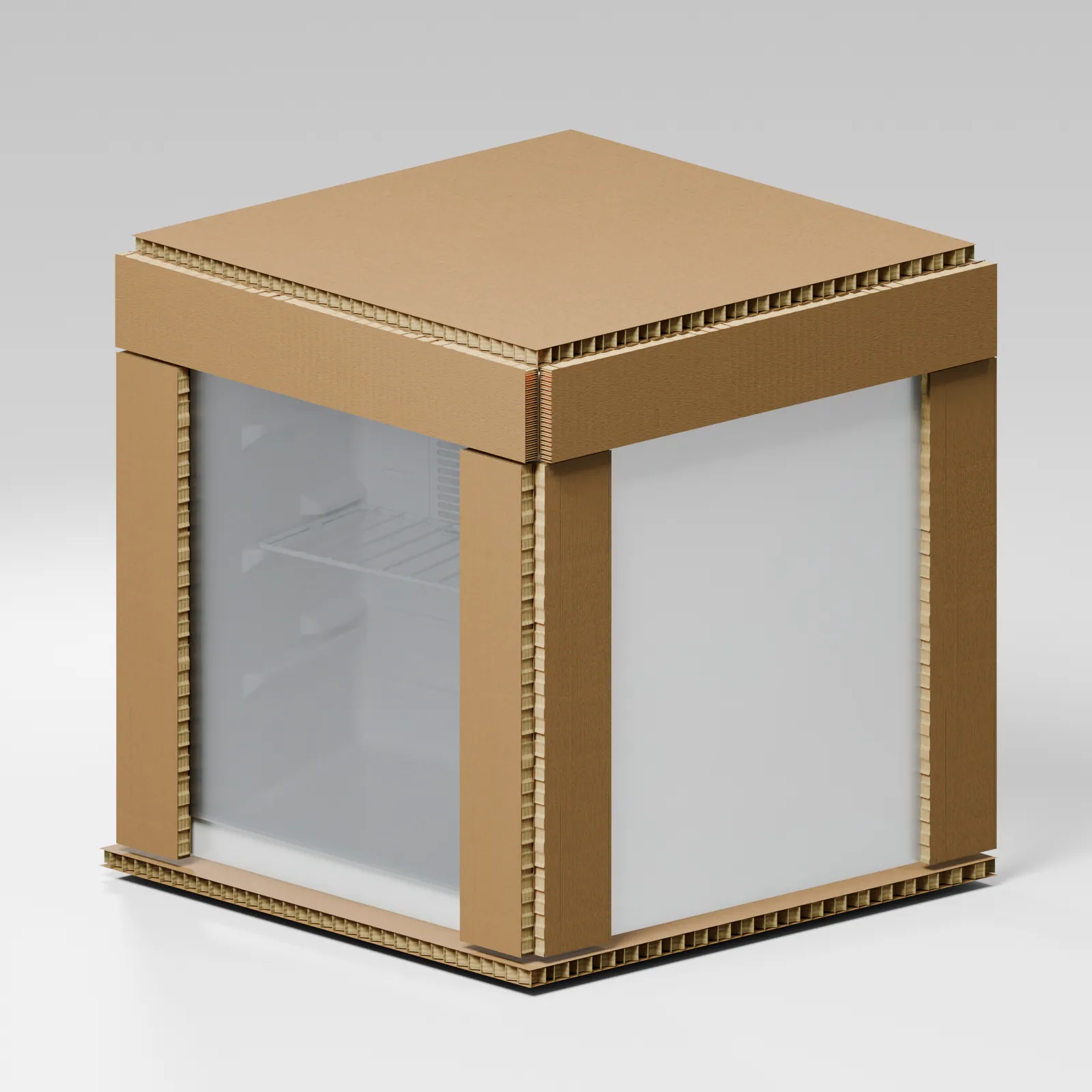
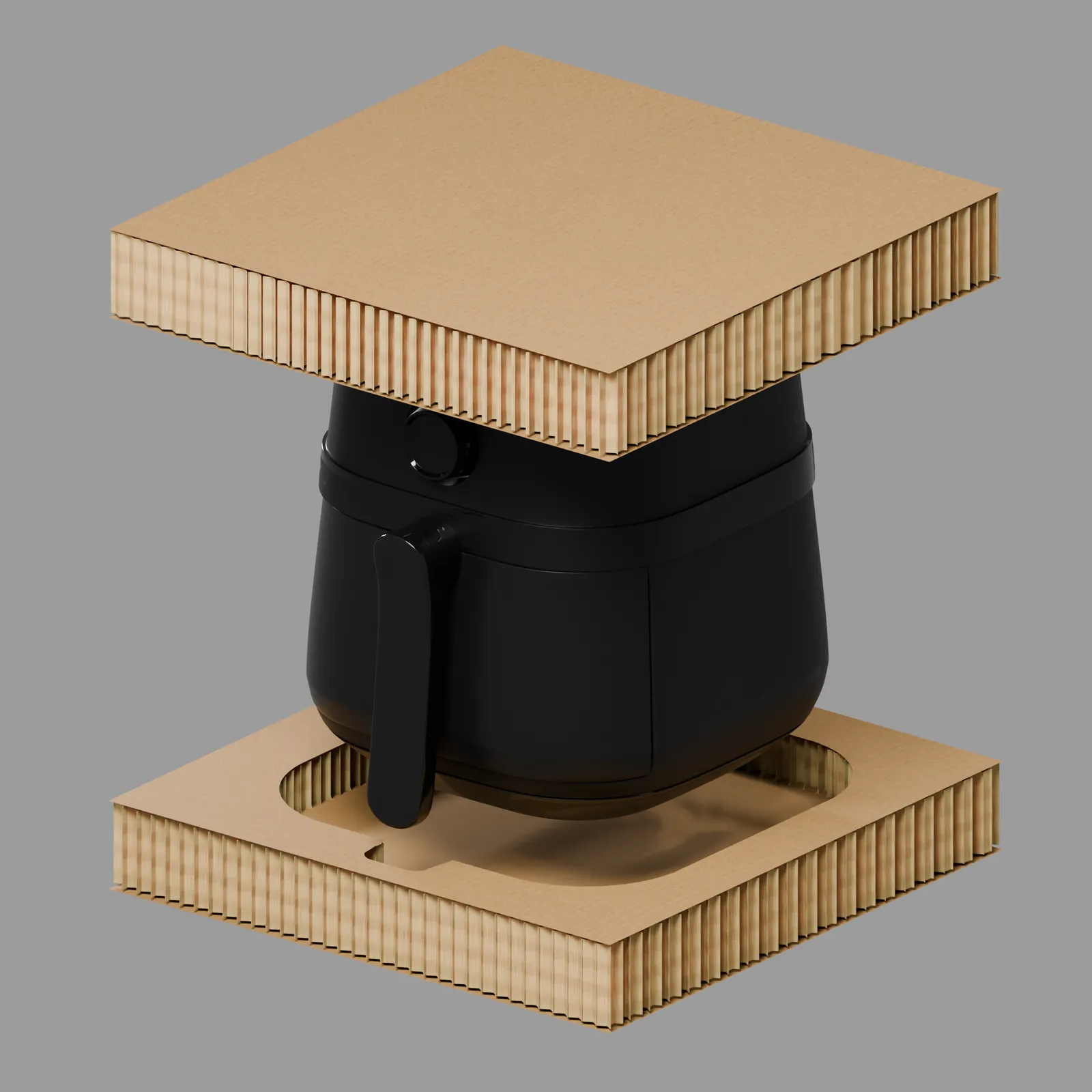
Depending on the product, the result may combine die-cut honeycomb boards, corner protectors, fillers and spacers, angle and edge boards, paper pallets or paper crates and pallet boxes. Browse the full product range.
Frequently asked questions
What if I do not have exact dimensions yet?
You can still start. Describe the product, its approximate size and weight, and how it ships, and note that exact dimensions will follow. A photo with key measurements is often enough for a first conversation. Exact sizes are confirmed before any component is specified or quoted.
Do I need to specify a test standard?
Only if your customer or internal quality team requires one. If they do, name it in the brief, for example a specific ISTA procedure, so the prototype is evaluated against it. If not, describe the journey in detail and the testing approach can be agreed with you.
Should I send my current packaging?
Yes, if you can. Photos, drawings or a physical sample of your current pack show what already works and where damage happens, and make it easier to see which parts honeycomb paper components could replace or improve.
How do I send a brief to Hexacell?
Use the enquiry form and include as much of the checklist above as you have. Drawings and photos can follow once the conversation starts; the important thing is to start the conversation with the product and its journey.
Sources
- International Safe Transit Association (ISTA). Test Procedures. https://ista.org/test_procedures.php
- International Plant Protection Convention. ISPM 15: Regulation of wood packaging material in international trade. https://www.ippc.int/en/publications/640/